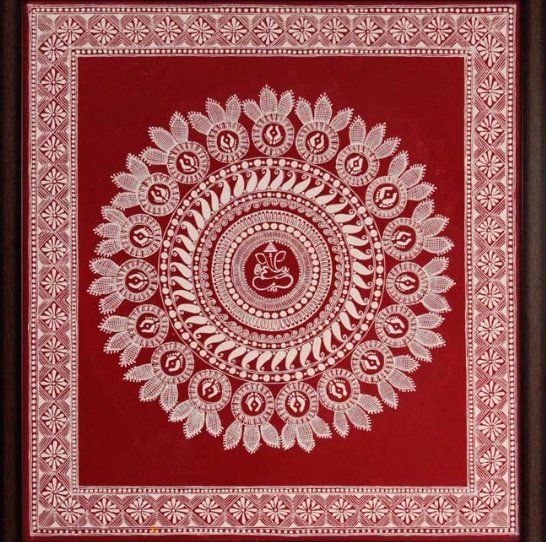
Aipan
Aipan is a traditional folk art from Uttarakhand, India, which is mainly practised by women. It is a form of ritual floor painting used on special occasions, ceremonies and religious rituals. Aipan is rooted in the cultural heritage of the Kumaon region and is said to bring good luck and blessings. The motifs reflect deep symbolism and artistic beauty.
- Aipan designs are made with red ochre (geru) as the base and rice paste for the patterns.
- The rice paste is made from soaked and ground rice and applied with the last three fingers of the right hand.
- Common motifs include creepers, lotus flowers, Lakshmi footprints, swastika and figurative representations of gods and goddesses.
- Aipan is used for festivals, ceremonies like weddings, threading ceremonies and even for occasions like death.
- Aipan is placed on floors, walls, wooden seats (chauki), pots, courtyards and entrances of houses and temples.
- For this purpose, the surface is cleaned with a cow dung liquid, a geru primer is applied and patterns are drawn with rice paste.
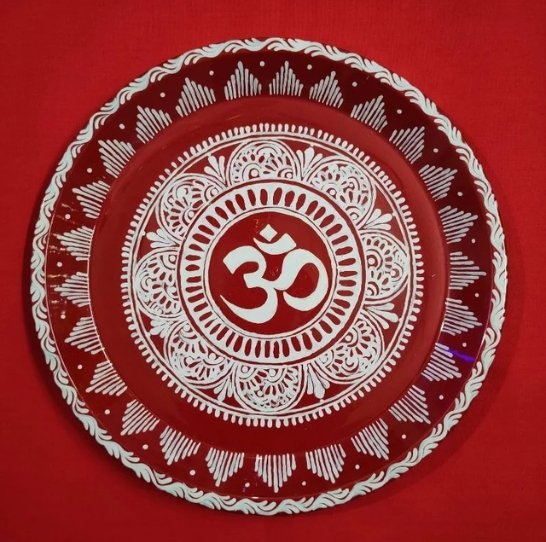
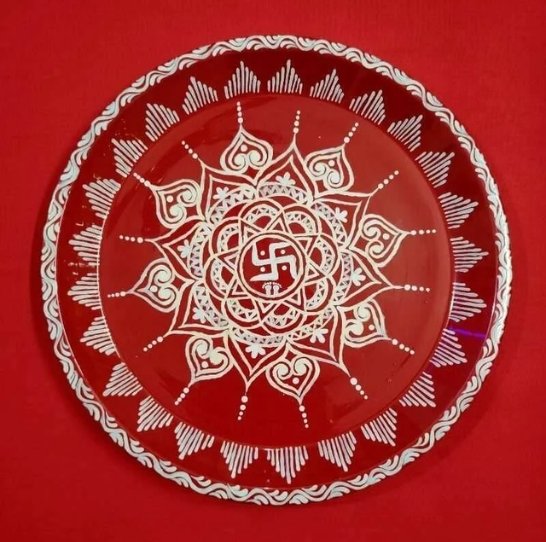
- The dots are an important feature symbolising completeness; their absence is considered unfavourable.
- Aipan motifs are now used on modern products such as bags, greeting cards, wall hangings, bookmarks and coasters.
- The decline of the custom is due to migration, modern lifestyles and the convenience of ready-made Aipan stickers.
- Efforts such as the Aipan project aim to revitalise the art form by raising awareness, empowering women and encouraging entrepreneurship.
- The Aipan craft in Uttarakhand is in the process of obtaining Geographical Indication (GI) status to protect its cultural uniqueness.
- Aipan reflects the heritage of Uttarakhand, with each design customised for specific occasions and deities, thus providing a visual narrative of life events and traditions.